Choosing where to buy the best Slatwall Displays in China takes more than comparing unit prices. A dependable supplier should explain panel materials, dimensions, finish options, compatible hooks, and realistic production times. Ask for close-up photos of the routed grooves and edge finish. Request a sample when color consistency matters. Small details show quickly under bright showroom lighting.
A practical sourcing principle comes from Lin Wei, a fictional retail-fixture specialist created for this introduction: “A display earns trust when its finish, fit, and load performance match the product it holds.” This is an editorially written line, not a verified quotation. Treat it as a reminder to request documented specifications, not as proof of any supplier’s capabilities.
China offers manufacturers and trading companies with different strengths. Some provide custom sizes and coordinated accessories; others focus on standard panels and faster production. Compare written quotations carefully. Check what they include: packaging, sample charges, hardware, and shipping terms. Ask how the supplier checks panel thickness and groove spacing before dispatch. A polished catalog is useful, but it cannot replace clear answers and verifiable product details.
No single factory suits every retailer. The right choice depends on your store layout, budget, order volume, and installation plan. Even careful checks can miss something. That is why a sample, a confirmed specification sheet, and direct communication matter before a large order.
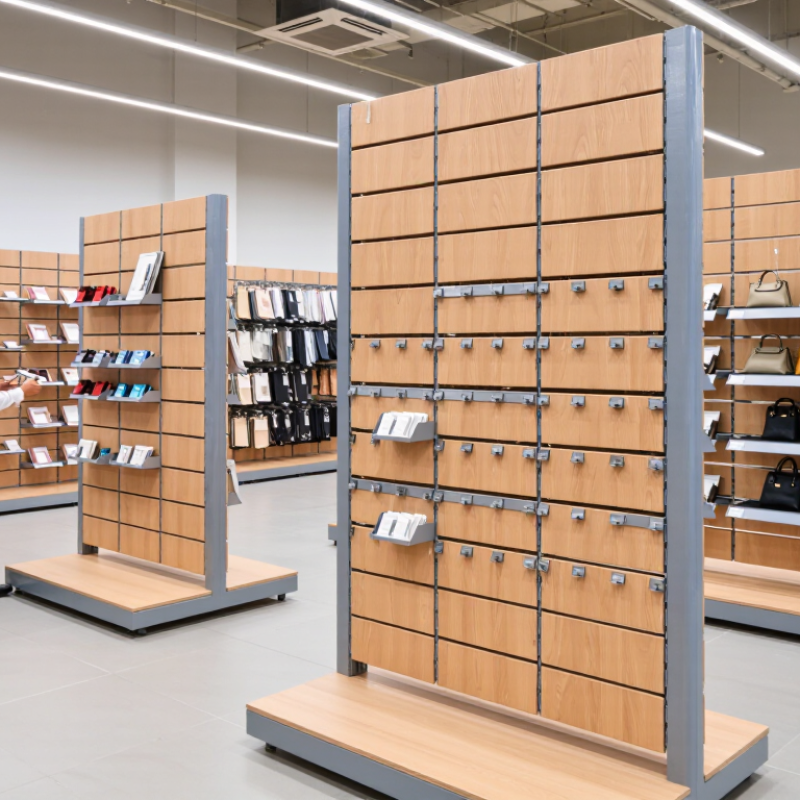
Slatwall displays use horizontal grooves to hold shelves, hooks, and small product fixtures. Retailers can rearrange these fittings without replacing the entire display. This makes them useful for shops with changing stock, such as clothing stores, hardware shops, and gift retailers. A panel near the entrance might hold seasonal items, while deeper shelves can support folded goods or boxed products. Materials and finishes vary, so check load ratings and edge quality before ordering.
In China, buyers can compare local manufacturers, wholesalers, and export suppliers. Ask for panel dimensions, core material, groove spacing, and sample photos taken in real lighting. A small sample can reveal rough edges or color differences that a catalog image may hide. Measure the wall and planned merchandise carefully. A display that fits the room may still block a walkway or place products out of reach. I have seen simple layouts work better than crowded ones, though that is not true for every store.
Tips: Test one panel with your actual hooks and products before placing a large order. Confirm packing details, lead time, and replacement-part availability in writing. Keep it practical. A minor mismatch can happen, so leave room for adjustment.
When evaluating slatwall display suppliers in China, look beyond catalog photos. Ask for drawings showing panel thickness, slot spacing, edge details, and compatible accessories. Small differences matter: a hook that fits one panel may sit loosely on another. Request a physical sample and inspect the surface under bright light. Check for chipped edges, uneven grooves, and finish inconsistencies. Then ask how the supplier tests load capacity. Get the test method and results in writing, rather than relying on a broad claim. A polished catalog can still hide practical flaws.
Review production controls, too. Ask whether the supplier checks materials and dimensions before packing, and request recent inspection records. Clarify what happens if a batch arrives with damaged corners or mismatched finishes. Good answers should be specific. Vague promises are a warning sign. Also confirm packaging details, including corner protection and carton strength; displays can look perfect at dispatch and arrive scuffed. Communication matters. Send a simple drawing and note how quickly the team identifies missing measurements or asks useful questions. That response is not proof of quality, but it reveals how carefully the project may be handled. I would still allow time for revisions. Specifications are easy to overlook.
Where to Buy the Best Slatwall Displays in China?
To find slatwall display manufacturers and wholesalers in China, start with established B2B directories, industry trade fairs, and regional manufacturing hubs for retail fixtures. Search for suppliers that make slatwall panels and accessories in-house, rather than only reselling finished goods. Ask for factory photos, product specifications, and recent quality-control records. A quick reply is useful, but it is not proof of reliable production.
Compare suppliers using the same written brief. Include panel dimensions, groove spacing, board material, surface finish, edge details, and expected order quantity. Request a sample before approving a large order. Check that hooks and shelves fit securely, and inspect the panel surface under bright light for chips or uneven laminates. Small details matter. Confirm packaging, lead time, customization limits, and how defects are handled. Wholesalers may offer lower minimum quantities or mixed products, while manufacturers can often adjust specifications more directly. Neither option is automatically better. A low quote can also omit packaging or sample fees, so compare the full offer, not just the unit price. When details remain unclear, pause and ask again; sourcing decisions sometimes need an extra round of questions.
| Sourcing Route | Common Sourcing Area | Best For | Products Commonly Available | Order Flexibility | What to Verify |
|---|---|---|---|---|---|
| Direct manufacturer | Guangdong, including Guangzhou, Foshan, and Dongguan | Retailers and project buyers seeking custom dimensions, finishes, or display layouts | MDF or melamine-faced slatwall panels, metal inserts, display fixtures, and compatible accessories | Customization is often available; minimum order quantities depend on materials, tooling, and specifications | Material composition, panel thickness, groove spacing, edge finish, load capacity, and production samples |
| Display-fixture wholesaler | Guangzhou and other commercial sourcing districts in Guangdong | Buyers who need standard display components or mixed fixture orders | Slatwall panels, hooks, shelves, brackets, baskets, and retail display accessories | Often more suitable for standard products and smaller mixed orders than custom factory production | Stock availability, accessory compatibility, packing details, and whether quoted prices include export packing |
| Custom retail-fixture fabricator | Industrial areas in Guangdong and nearby Pearl River Delta cities | Store fit-outs, branded layouts, and coordinated display projects | Made-to-order slatwall units, gondola displays, counters, shelving, and metal or wood fixtures | Project-based; drawings and approved samples are commonly needed before production | Shop drawings, finish samples, production schedule, installation requirements, and quality inspection process |
| Online B2B supplier directory | Suppliers listed across major manufacturing regions in China | Comparing multiple suppliers before requesting samples or quotations | Standard panels, custom panels, hardware, and complete display solutions | Varies by supplier; specifications and order terms should be confirmed directly | Factory or trading-company status, business documentation, sample consistency, payment terms, and shipment terms |
| Local sourcing agent or inspection service | Can coordinate with suppliers in Guangdong and other production regions | Overseas buyers needing supplier checks, production follow-up, or pre-shipment inspection | Supplier sourcing and quality checks for panels, fittings, and assembled displays | Service-based; scope and fees depend on the project and inspection requirements | Written service scope, inspection checklist, reporting format, and responsibility for re-inspection |
When buying slatwall displays in China, assess a sample before discussing a large order. Check panel thickness with calipers, inspect groove spacing, and hang a loaded hook for several hours. Look for chipped edges, uneven laminate, and panels that flex under ordinary retail weight. Small details matter.
Ask the supplier for material specifications, load-test records, and photos of completed production batches. A polished sample can hide inconsistent cutting or weak backing in bulk production. Request a pre-shipment inspection with measurements, finish references, and packaging checks listed in writing. Ask twice.
Customization should be tested against the actual shop layout. Send a dimensioned drawing showing wall length, corners, lighting, and the products to display. Confirm whether shelves, hooks, and color finishes fit the same groove system. Request a physical color swatch; screens often distort warm gray or woodgrain tones. Changes are not always improvements. Keep an approved sample or drawing as the production reference, and confirm how revisions affect cost and lead time. For compliance, identify the destination market and ask which safety, material, or labeling requirements apply. Verify relevant certificates with the issuing body, and ensure documents describe the exact model and materials ordered. A supplier’s assurance alone is not enough. Compare the paperwork, sample, and final inspection report before releasing payment. A little friction here is useful.
Where to Buy the Best Slatwall Displays in China?
Compare samples, pricing, and shipping before choosing a supplier. Ask for a physical sample in the intended finish, then inspect its edges, groove spacing, and surface under bright store lighting. Test a loaded panel with the hooks or shelves you plan to use. Photos can hide uneven grooves. A sample may not match the final production run, so request written specifications and approval of a production sample when possible. Compare quotations on equal terms: panel dimensions, material, finish, packaging, minimum order, and any tooling charges. The lowest unit price can become less attractive after crating and freight.
Shipping deserves a separate check. The World Bank’s 2023 Logistics Performance Index ranked China 19th among 139 economies, with a score of 3.7; this gives useful country-level context, not a guarantee about one supplier. UNCTAD reported that global maritime trade grew 2.4% in 2023, while noting continuing disruption and uncertainty in shipping. Request the shipment method, estimated transit window, packaging details, and a clear breakdown of freight costs. Allow a buffer. Schedules change.
Tips: Request sample and bulk-order photos beside a ruler, and confirm panel weight, carton dimensions, and replacement terms in writing. I would not treat one polished sample as proof of consistent production; it is a useful check, not a perfect one.
Compare typical international shipping transit times when evaluating samples, pricing, and delivery.
These are broad planning estimates, not supplier-specific delivery promises; actual transit times depend on destination, route, carrier, customs, and service level. Request a physical sample and an itemized quote, then confirm the door-to-door schedule and total landed cost before choosing a supplier.
Horizontal grooves hold hooks, shelves, and small fixtures. Stores can rearrange them as products change. Handy, but not magic.
Hooks can hold lightweight packaged goods, while deeper shelves suit folded clothing or boxes. Check load ratings before placing heavy items.
Test the actual hooks on a physical sample. Check whether they sit securely or wobble. A drawing may miss that detail.
Look for chipped edges, uneven grooves, and inconsistent finishes under bright light. Compare the sample with the written specifications.
Request panel dimensions, thickness, groove spacing, core material, edge details, and compatible accessories. Ask for drawings, too.
Send each supplier the same brief and order quantity. Compare packaging, samples, lead times, and defect handling, not only unit prices.
Wholesalers may offer smaller minimum orders or mixed products. Manufacturers may adjust specifications more directly. Neither choice guarantees a better fit.
Measure the wall and walkway before ordering. Confirm corner protection and carton strength in writing. Leave some room for adjustments.
Choosing the best Slatwall Displays in China starts with understanding how these versatile fixtures support product presentation, space organization, and changing retail needs. Buyers should compare manufacturers and wholesalers based on production experience, communication, available materials, manufacturing capacity, and the clarity of their product information. Supplier directories, trade events, and direct online inquiries can help create a shortlist, but each option should be evaluated carefully rather than selected on price alone.
Before making a decision, assess construction quality, finishes, customization options, and whether products meet the requirements of your intended market. Request samples or detailed specifications to verify dimensions, load capacity, and workmanship. Compare itemized quotes, minimum order quantities, production timelines, packaging, and shipping arrangements. Reviewing these factors together helps buyers select a dependable supplier and find displays that balance appearance, functionality, and overall value.
DeltaStorage