Choosing Shelving Boards in 2026 is less about picking the thickest panel and more about matching material, span, load, and room conditions. A shelf holding cookbooks across a 900 mm gap faces different demands from one supporting folded towels in a closet. Particleboard, MDF, plywood, and solid wood each behave differently under weight and humidity. Small details matter: edge support, fixing points, and whether a shelf may be exposed to spills.
Industry references help narrow the options, but they cannot replace careful measurements. FAO’s Forest Products Annual Market Review 2023–2024 tracks production and trade in wood-based panels, offering useful context on panel categories and supply. The USDA Forest Products Laboratory’s Wood Handbook—Wood as an Engineering Material (FPL-GTR-282, 2021) explains how wood properties and moisture affect performance. These sources support informed comparisons; they do not provide a universal load rating for every finished shelf. That distinction matters. A board’s thickness alone cannot predict sagging without its length, support layout, and expected load. Before buying, check the manufacturer’s specifications and consider the heaviest items the shelf will carry. A practical choice may still involve compromise: lower-cost panels can suit dry, well-supported spaces, while damp rooms call for closer attention to moisture resistance and edge protection. The aim is not to find a perfect board. It is to choose one that fits the job and remains dependable in everyday use.
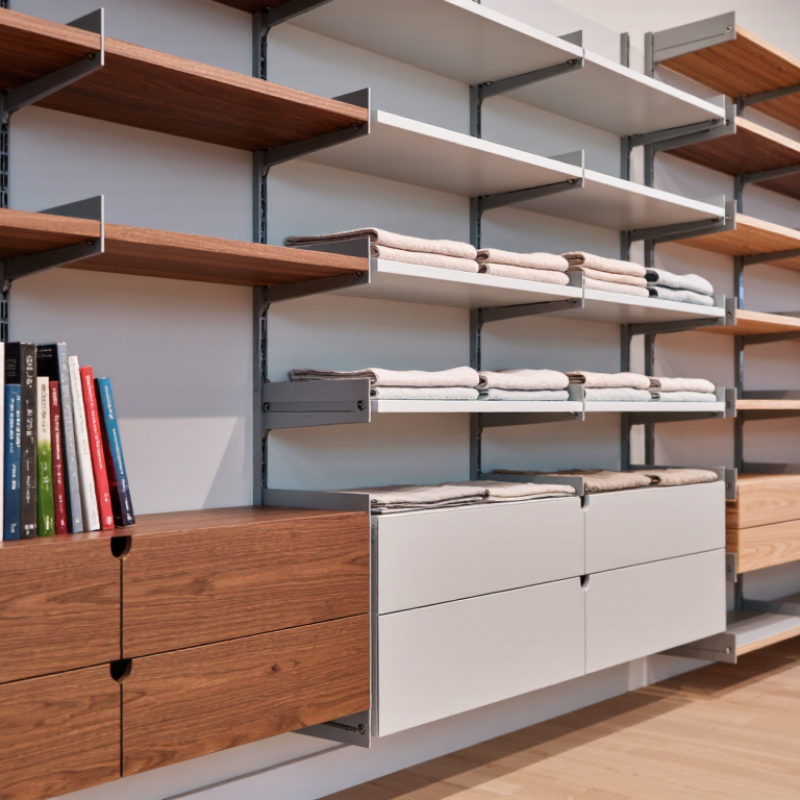
Before choosing a shelving board, define what it will hold, how often it will be used, and where it will sit. A shelf for folded towels has different demands from one carrying dense books or a small aquarium. Measure the clear span between supports, not just the overall shelf width. Longer spans can sag, even when the board looks sturdy in the store. Check the manufacturer’s load and span guidance for the exact thickness and support spacing.
Conditions matter, too. A pantry may stay dry, while a laundry room can see repeated humidity changes. The USDA Forest Products Laboratory’s Wood Handbook reports equilibrium moisture content of about 9% at 50% relative humidity and 16% at 80%, at roughly 70°F. That difference can affect wood movement and board stability. For damp locations, confirm that the chosen panel is rated for the exposure; “water-resistant” does not mean waterproof. Check twice.
Think about edges and daily handling. A board holding baskets may need a durable finish, while a display shelf might prioritize appearance. In a garage, account for temperature swings, dust, and occasional knocks. I would not pick a board from appearance alone; that shortcut is easy to regret. Record the expected load, span, and room conditions before comparing materials. Those details make the choice more reliable, though real rooms rarely stay perfectly consistent.
| Board Type | Suitable Purpose | Conditions to Consider | Key Advantages | Limitations and Care | Useful Selection Checks |
|---|---|---|---|---|---|
| Plywood | General-purpose shelves, cupboards, workshops, and utility storage. | Choose a suitable grade for the expected indoor or exterior exposure; edges may need sealing where moisture is possible. | Cross-laminated veneers provide a stable panel, and plywood is available in a range of thicknesses and face finishes. | Appearance and performance vary by grade and construction. Unsealed edges can absorb moisture, and prolonged wetting can cause damage. | Check panel grade, thickness, support spacing, edge finish, and the fastener manufacturer’s guidance. |
| Solid timber | Visible shelves, furniture, and projects where a natural wood appearance is desired. | Allow for seasonal changes in humidity, especially in wide boards and rooms with fluctuating conditions. | Can be sanded and refinished; strength and appearance depend on the wood species, board quality, and construction. | Wood can expand, contract, warp, or split as moisture conditions change. Knots and grain direction affect consistency. | Inspect for straightness, defects, moisture condition, and suitable support; apply a finish appropriate to the setting. |
| MDF | Painted indoor shelving, cabinets, and projects needing a smooth, uniform surface. | Best suited to dry interior locations unless a specifically moisture-resistant product is selected for an appropriate use. | Smooth faces are easy to paint, and the material has a consistent structure without natural grain. | Standard MDF can swell if it gets wet; it is relatively heavy, and fixing into edges requires care. | Confirm the product’s intended environment, seal cut edges, and check support spacing and fixing details. |
| Particleboard | Budget-conscious indoor shelving, often used with a melamine or other decorative surface. | Keep dry and protect exposed edges, particularly near sinks, floors, or other likely sources of spills. | Usually economical and available with ready-finished surfaces for indoor furniture and cabinets. | Moisture can cause swelling and deterioration. Screw-holding performance and stiffness depend on panel grade and thickness. | Check panel grade, surface and edge condition, shelf span, and whether the hardware is designed for the panel. |
| Laminated board | Indoor shelves where a finished, easy-to-clean decorative face is wanted. | Consider the board core and protect joints and cut edges from water; decorative surface does not make every core waterproof. | Offers a finished face in a variety of colors and patterns, reducing the need for painting. | The surface can chip or scratch, and damage to the laminate or edges can expose the core to moisture. | Identify the core material, inspect edge banding, and use suitable supports and cleaning methods. |
| Moisture-resistant panel | Indoor shelves in areas with occasional humidity or splash risk, when the product is rated for that application. | Verify the panel’s stated exposure rating; moisture-resistant does not mean waterproof or suitable for continuous outdoor exposure. | Designed to tolerate moisture better than comparable standard panels, depending on product type and installation. | Cut edges, joints, and fastener holes may still need protection. Standing water or persistent damp can still cause damage. | Read the technical data sheet, confirm the intended use, and seal exposed edges as directed. |
| Any board type | Books, pantry items, tools, appliances, or other loads that differ in weight and use. | Assess shelf width and depth, unsupported span, support layout, wall construction, humidity, and possible impact or vibration. | A well-matched board and support system can reduce excessive bending and improve service life. | A board’s safe load cannot be determined from material name alone; it varies with dimensions, grade, supports, fixings, and load distribution. | Follow the board and bracket manufacturers’ load guidance. Use more support or a shorter span for heavier loads, and secure wall fixings to suitable structure. |
Planning note: There is no single thickness or load rating that suits every shelf. Confirm the board’s specifications and the complete support system for the intended span, load, and environment before installation.
Measure the items you plan to store, not just the wall. Binders need more depth than folded towels. Leave room for your hands.
Board thickness, material, support spacing, brackets, wall fixings, and the wall all matter. Check the stated rating and how the load should be distributed.
Avoid long unsupported spans, especially with heavy items. Add a support or choose a shorter board. Books piled in the middle create extra strain.
Add the expected weight, then leave a safety margin below the stated limit. It may feel overly cautious, but replacing a bowed board is worse.
Choose a sealed surface that wipes clean easily. Matte finishes can hide small scuffs, though greasy marks may show near cooking areas.
Use moisture-resistant material and protect the board’s edges. Water can seep in there first. A glossy coating cannot fix a persistently humid room.
Yes. Wood responds to humidity, even after finishing. Indoor conditions vary, so treat typical moisture ranges as a guide, not a promise.
Yes. A board beside a bright window may fade unevenly, especially where objects block the light. Test a finish sample under the room’s lighting.
Choosing the right Shelving Boards in 2026 starts with understanding what they will hold, where they will be installed, and how often they will be used. Consider the room’s temperature, humidity, and available space, then compare materials and construction for strength, stability, and resistance to everyday wear. Solid, engineered, and other board types can differ in weight, cost, and performance, so match the material to the demands of the project.
Next, check each board’s dimensions and rated load capacity, allowing for both the weight of stored items and the support provided by brackets or a frame. Choose a finish that suits the room and can handle its environment, especially in areas exposed to moisture or frequent cleaning. Before installation, review safety guidance, support spacing, and mounting requirements. Careful planning helps create shelving that is practical, durable, and suited to its intended use.

 DeltaStorage