How to Choose Modular Shelving for Global Buyers in 2026?

Time:2026-10-03 Author:Madeline
0%

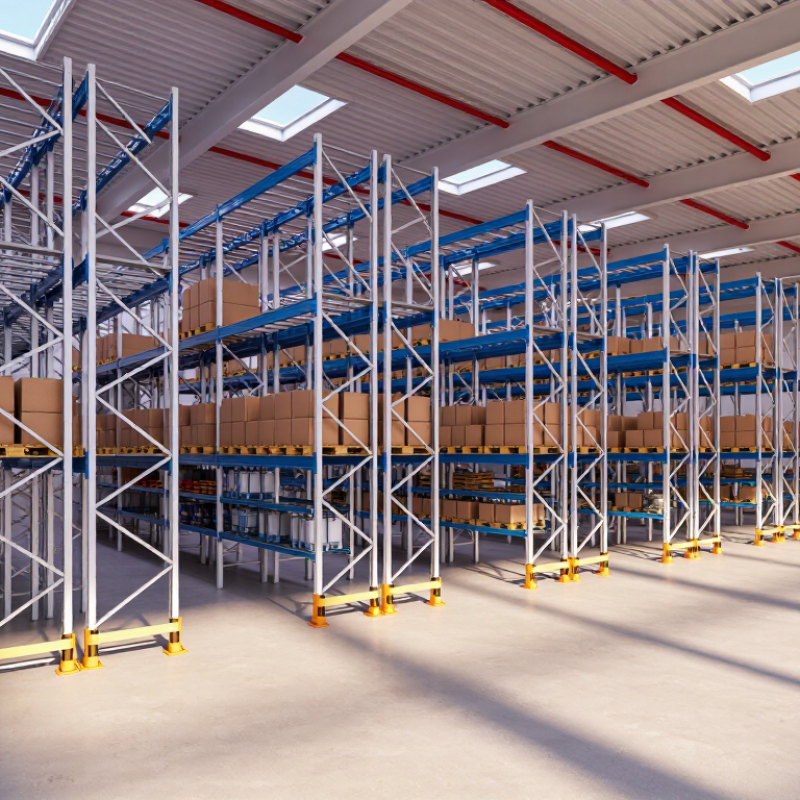
Choosing Modular Shelving in 2026 requires more than comparing price, color, and advertised load capacity. Global buyers must assess warehouse conditions, local regulations, shipping routes, and future expansion. The UNCTAD Review of Maritime Transport 2024 states that maritime shipping carries over 80% of global merchandise trade. A shelving decision therefore affects packaging, container utilization, delivery risk, and installation time. A well-designed system should travel efficiently and perform safely after arrival.

Industry data also supports a flexible approach. The MHI Annual Industry Report 2024 identifies rising investment in supply-chain technology and stronger pressure for operational adaptability. Modular Shelving can support these goals through adjustable levels, replaceable components, and gradual expansion. Yet flexibility is not automatic. A 2.4-meter bay may fit one warehouse perfectly, but fail beside a low ceiling, sprinkler line, or narrow loading door. Buyers should check bay dimensions, beam thickness, shelf deflection, corrosion resistance, and tested load ratings. Ask for engineering drawings, inspection records, and clear installation instructions.

International compliance deserves equal attention. Depending on the destination, buyers may need to review standards such as EN 15635, ANSI/RMI MH16.1, or applicable workplace-safety rules. Requirements vary by product type and market. No single certificate proves universal suitability. That assumption needs challenging. A reliable supplier should explain test methods, material grades, warranty limits, spare-part availability, and after-sales support. Consider a pilot order first. Place cartons, tools, and seasonal stock on the sample unit. Measure assembly time. Notice wobbling, sharp edges, and missing hardware. These small observations often reveal more than a polished catalogue.
How to Choose Modular Shelving for Global Buyers in 2026?

Define Load, Span, and Use Case Against ISO 7170:2021 Test Criteria

How to Choose Modular Shelving for Global Buyers in 2026?

Modular shelving should be selected by load, span, and daily use, not appearance alone. Start by defining the real load on each shelf. Include books, archive boxes, tools, and unevenly distributed items. Then measure the clear span between supports. A longer span usually increases deflection and demands stronger components.

ISO 7170:2021 provides test criteria for the strength, durability, and stability of storage furniture. Ask for test evidence matching the proposed configuration. Check whether the stated load applies to one shelf, one bay, or the complete unit. Confirm the tested shelf spacing, connector type, support method, and anchoring conditions. A test result may not represent your installation if these details change. It is also important to review stability risks during loading, unloading, and repeated adjustment. The standard helps structure evaluation, but it does not replace local installation requirements or site-specific risk assessment.

Tips: Describe the use case clearly. A library, warehouse office, and retail back room need different assumptions. Request drawings with dimensions and tolerances. Test a sample under realistic loading before purchasing at scale. Watch the joints. Small looseness can become noticeable after repeated reconfiguration. One weakness remains: buyers often compare maximum loads without comparing span or safety conditions. That shortcut can produce a tidy specification, but a poor working shelf.

How to Choose Modular Shelving for Global Buyers in 2026?

Define load, span, and use case against ISO 7170:2021 test criteria

The chart shows practical procurement planning examples for four use cases. Loads are nominal shelf contents converted from kilograms to newtons using standard gravity of 9.80665 m/s². The listed spans are clear shelf spans, not ISO-prescribed limits. Final selection should verify strength, durability, and stability using the applicable ISO 7170:2021 test configuration, shelf construction, support spacing, and loading method.

Match Module Dimensions to 1,200×800 mm and 1,200×1,000 mm Pallets

How to Choose Modular Shelving for Global Buyers in 2026?
Match Module Dimensions to 1,200×800 mm and 1,200×1,000 mm Pallets

Global buyers should begin with the pallet, not the shelf panel. These two footprints require different bay planning. A 1,200×800 mm pallet suits narrower access lanes. A 1,200×1,000 mm pallet usually needs greater depth and stronger support. Measure the actual load, including overhang, wrap, and uneven cartons. Small errors become expensive quickly.

For the 1,200×800 mm format, select usable shelf depth slightly beyond 800 mm. Leave space for safe placement and inspection. For 1,200×1,000 mm pallets, deeper modules can reduce edge damage. Avoid excessive depth, though. It may hide labels and waste aisle space. Check clear bay width against the pallet’s entry direction. Forklift turning needs room too. Adjustable beams help when both footprints share one warehouse.

I have seen buyers specify outer dimensions only. That choice caused blocked aisles and awkward loading. Use clear internal dimensions, beam ratings, and floor capacity during approval. Ask suppliers for load tests, drawings, and corrosion information. Confirm metric tolerances before ordering multiple containers. A perfect fit is not always practical. Real pallets vary. Wood can swell, and packaging can shift. Leave controlled working clearance, then test one assembled bay with the heaviest planned load. Recheck after installation and verify local workplace requirements.

Compare Materials Using EN 16121:2023 Safety and Durability Tests

Global buyers choosing modular shelving in 2026 should compare test evidence, not attractive material samples. EN 16121:2023 provides a useful framework for assessing non-domestic storage furniture. It examines stability, strength, durability, and resistance to repeated use. The standard does not declare one material universally superior. Instead, it helps buyers judge whether a complete shelving system performs safely.

Steel often supports high loads and repeated adjustment, but thin sections may bend after poor forming. Engineered wood can offer a warmer appearance, yet moisture exposure may weaken edges and joints. Plastics resist corrosion, although heat and long-term loading deserve closer review. Ask suppliers for test reports covering the finished unit, including shelves, connectors, feet, and locking parts. A material certificate alone is not enough.

Look for evidence from EN 16121:2023 tests, with clear sample descriptions and laboratory details. Check whether the tested configuration matches your planned height, shelf spacing, and maximum load. Small differences matter. A taller unit may behave differently. Adjustable modules also need repeated assembly checks, because movement can loosen connections over time. In sourcing work, missing documents often create more risk than a visibly imperfect surface. I would also inspect packaging and assembly instructions, since damage or incorrect installation can undermine otherwise sound test results. No choice is flawless. That should remain visible in the purchasing record.

Verify Global Compliance with ISO 7170 and Local Fire-Safety Rules

How to Choose Modular Shelving for Global Buyers in 2026?

Global buyers should treat ISO 7170 as a practical verification tool, not a universal approval label. The standard evaluates storage-unit strength, durability, and stability under defined test conditions. Ask suppliers for complete test reports, loading limits, test dates, and the exact product configuration. A report for one shelf depth may not cover another. Small details matter.

Check how the shelving performed with loaded shelves, repeated movement, and uneven forces. Look for evidence from a competent laboratory, preferably one operating under ISO/IEC 17025 principles. Confirm the anchoring method, floor requirements, connector design, and allowable load per level. Request installation instructions with diagrams. They often reveal weaknesses hidden in product photographs.

Fire safety requires separate local verification. Rules may differ between warehouses, offices, schools, and public facilities. Confirm material reaction, surface coatings, plastic components, smoke concerns, aisle clearance, and sprinkler access with the local authority or a qualified fire professional. Do not assume metal shelving is automatically fire-safe. Its contents can burn, and blocked escape paths create serious risks. I have seen buyers focus on load capacity while overlooking wall distance and emergency access. That mistake is easy to repeat. Documentation should identify the destination country, building type, and final installation conditions. Without those details, compliance claims remain incomplete.

How to Choose Modular Shelving for Global Buyers in 2026? – Verify Global Compliance with ISO 7170 and Local Fire-Safety Rules
Decision Dimension What to Specify or Verify Relevant Standard, Rule or Reference Evidence Required from the Supplier Buyer Priority
Product category Confirm whether the product is freestanding shelving, wall-mounted shelving, mobile shelving, a cabinet-based storage unit, or a system connected to a building structure. ISO 7170 applies to storage units and covers test methods for strength, durability and stability. The applicable product configuration must be stated in the test report. Product description, assembly drawings, intended-use statement and model-specific test report. Essential
ISO 7170 edition and scope Require the exact ISO 7170 edition used, test laboratory, test configuration and any deviations from the published method. Do not accept a certificate that only names “ISO tested” without details. ISO 7170 is a performance test standard; it does not replace local building, fire or anchorage requirements. Complete laboratory report showing the standard edition, specimen dimensions, loads, test sequence, results and conclusion. Essential
Strength and durability Check shelf loading, frame loading, connector durability, door or drawer operation where applicable, and repeated-use performance under the intended duty cycle. ISO 7170 test results should identify the applied loads and number of cycles. Acceptance limits depend on the applicable product category and test procedure. Load schedule, cycle counts, deformation observations, damage records and pass/fail conclusion for the tested configuration. Essential
Stability and overturning risk Verify resistance to tipping during normal use, partially loaded conditions, open-door or open-drawer conditions, and foreseeable misuse identified by the buyer. ISO 7170 includes stability-related testing. Local regulations may additionally require anti-tip devices, wall fixing or seismic restraint. Stability test report, anti-tip design, anchorage instructions and a site-specific fixing schedule. High
Rated load and shelf spacing State the uniformly distributed load per shelf, maximum total unit load, maximum bay width, shelf pitch and any restrictions on concentrated loads. Load values are product-specific and should not be inferred from shelf thickness alone. Building codes may impose additional storage-load or anchorage requirements. Signed load table, engineering calculations where required, shelf deflection limits and installation drawings. Essential
Materials and surface finish Identify steel, aluminium, timber-based panels, solid timber, plastics, coatings, adhesives and decorative laminates. Specify corrosion protection for humid or coastal locations. Material fire performance can differ from the performance of the complete assembled shelving system. A component certificate should not automatically be treated as a system classification. Material declarations, coating specifications, safety data where relevant, corrosion test results and product composition statement. Medium
European fire classification For projects requiring European reaction-to-fire classification, identify the classification of each relevant exposed component and the complete product where required. EN 13501-1 classifies construction products by reaction to fire, using classes A1, A2, B, C, D, E and F, with additional smoke and flaming-droplet designations where applicable. Requirements vary by building type and location. Valid classification report or classification document identifying the tested product, thickness, substrate, mounting method and field of application. High
European market documentation Determine whether the shelving is a construction product, furniture product or other regulated product under the specific project and national rules. Regulation (EU) No 305/2011 applies to construction products covered by a harmonised technical specification. It does not automatically apply to every item of furniture or shelving. Regulatory classification statement, declaration of performance where legally applicable, technical file and installation instructions. Medium
United States fire requirements Confirm the adopted state or municipal building code, occupancy classification, interior-finish requirements and whether the shelving is part of an interior wall or finish assembly. IBC is a model building code adopted and amended by jurisdictions. ASTM E84 evaluates surface burning characteristics of exposed materials; it is not a universal approval for complete shelving systems. NFPA 286 may be required for certain interior finish assemblies. Jurisdiction-specific code review, applicable ASTM E84 or NFPA 286 report, tested mounting details and authority-having-jurisdiction acceptance where required. High
United Kingdom fire requirements Check the applicable national building regulations, project occupancy, circulation routes, escape routes and exposed surface requirements. Approved Document B provides fire-safety guidance for England; Scotland, Wales and Northern Ireland have separate regulatory systems. BS 476 references may still appear in project specifications, but the required route depends on the jurisdiction and product application. Fire classification evidence, project-specific specification review and confirmation from the appointed fire consultant or building-control authority. High
Canada fire requirements Confirm the provincial or territorial code in force, occupancy type, interior-finish location and any requirements for combustible components. The National Building Code of Canada is a model code; provinces and territories adopt and amend it. CAN/ULC-S102 is commonly referenced for surface-burning characteristics of building materials and assemblies. Applicable CAN/ULC test report, code review and documentation for the exact material, thickness, assembly and installation method. High
Australia and New Zealand Check the relevant building code, use classification, fire-hazard properties and location of the shelving within the building. The National Construction Code of Australia is adopted through Australian jurisdictions and may reference AS 1530.1, AS 1530.3 or other methods depending on the required fire property. New Zealand requirements should be checked against the current New Zealand Building Code and referenced standards. Jurisdiction-specific compliance statement, applicable fire-test report, installation details and project approval record. High
Asia-Pacific local rules Identify the exact country, city and building authority before selecting materials or finishes. Requirements can differ between public buildings, offices, warehouses, hotels and residential projects. Local building and fire codes may specify flame-spread, smoke, combustibility, compartmentation, sprinkler clearance or egress provisions. International standards are not automatically accepted by every authority. Local code matrix, translated test documents where required, fire consultant review and authority approval record. High
Anchorage and seismic conditions Specify wall type, floor type, anchor capacity, fixing spacing, seismic zone and whether the unit must remain stable when fully or partially loaded. ISO 7170 does not replace structural design requirements for building anchorage or seismic restraint. Local structural codes govern the connection to the building. Anchor schedule, pull-out or shear calculations, structural drawings and installation method statement. High
Sprinkler and detector clearance Verify clearances from sprinkler heads, smoke detectors, lighting and ventilation outlets. Do not allow shelf layouts to obstruct fire-protection equipment. Clearance requirements are governed by the adopted fire code and the sprinkler-system design standard. They vary by sprinkler type, storage arrangement and building use. Reflected ceiling plan, storage layout, fire-protection consultant approval and installation controls. High
Modularity and interchangeability Define compatible bay widths, upright profiles, shelf adjustment increments, connector types and maximum permitted combinations. ISO 7170 evidence is valid only for the tested configuration or the documented field of application. Adding bays, changing shelves or removing braces may invalidate the result. Compatibility matrix, approved configuration list, assembly drawings and change-control procedure. Essential
Traceability and quality control Require batch identification for frames, shelves, connectors and fire-critical components, especially when products are manufactured in multiple locations. Traceability supports verification that production units match the tested design and declared materials. Batch records, inspection plan, material certificates, incoming inspection criteria and nonconformance procedure. Medium
Installation and maintenance Provide multilingual instructions covering levelling, anchorage, load distribution, inspection intervals, replacement parts and prohibited modifications. Fire and structural performance can change if the product is cut, drilled, overloaded, installed without required fixings or fitted with unapproved accessories. Installation manual, maintenance schedule, warning labels, spare-parts list and installer training record. Essential
Final global-buyer acceptance checklist Approve only when the ISO 7170 report, local fire review, structural anchorage design, configuration list and installation documents all refer to the same product version. ISO 7170 demonstrates tested storage-unit performance; local authorities determine legal fire and building acceptance. Signed technical submittal, model-specific test reports, code compliance matrix, approved drawings and purchase-order specification. Mandatory before order
Important: Fire-safety requirements are jurisdiction-, occupancy- and installation-specific. ISO 7170 is not a fire-test standard and does not by itself establish legal compliance. The final selection should be reviewed against the current code adopted by the local authority having jurisdiction in 2026.

Build Landed-Cost Models with ISO 668 Container Capacity Data

How to Choose Modular Shelving for Global Buyers in 2026?

ISO 668 data provides a practical starting point for modular shelving cost models. It defines standard container dimensions, including common 20-foot and 40-foot units. A 40-foot high-cube container offers more vertical clearance, but it does not guarantee better loading efficiency. Shelving cartons may waste space around frames, posts, and protective corners. Measure those gaps.

A 40-foot high-cube container offers more vertical clearance, but it does not guarantee better loading efficiency.

Build the model with actual packed dimensions, not product dimensions alone. Record each carton’s length, width, height, gross weight, and quantity per pallet. Then test several loading patterns inside the usable container space. Modular parts often nest well, while assembled sections can create expensive air volume. Leave room for doors, bracing, and unloading access. Small details matter.

Include ocean freight, terminal fees, customs charges, insurance, inland delivery, and warehouse handling. Separate fixed costs from carton-level costs. This makes comparisons clearer across container types and order volumes. Check payload limits too. Cubic capacity is not the same as legal carrying capacity.

My early spreadsheets were too optimistic because they ignored pallets and corner protection. A spreadsheet can still lie. Recheck the model using a real packing trial, photographs, and measurements from the loading team. Some savings may disappear after damaged cartons, repacking labor, or unused container height are counted.

FAQS

What does ISO 7170 help global shelving buyers verify?

It evaluates strength, durability, and stability under defined test conditions. It is not universal approval. Ask for complete reports, load limits, test dates, and product configuration.

Can one test report cover every shelving configuration?

Not always. A report for one shelf depth may not cover another. Check the exact frame, connector, shelf size, and loading method.

What details should a shelving test report include?

Look for loaded-shelf results, repeated movement tests, and uneven-force performance. Confirm the laboratory’s competence and testing principles. Small details matter.

What installation information should buyers request?

Request diagrams showing anchoring, floor requirements, connector design, and allowable load per level. Installation instructions can reveal weaknesses hidden in product photographs.

How should buyers check local fire-safety requirements?

Confirm rules with the local authority or a qualified fire professional. Requirements may differ for warehouses, offices, schools, and public facilities.

Is metal shelving automatically fire-safe?

No. Stored contents can burn, even when the structure is metal. Check coatings, plastic parts, smoke concerns, aisle clearance, sprinkler access, and escape routes.

How can ISO 668 support container-cost planning?

Use standard container dimensions as a starting point. Measure each packed carton, pallet, frame, post, and protective corner. Empty space adds cost.

What costs belong in a landed-cost model?

Include ocean freight, terminal fees, customs charges, insurance, inland delivery, and warehouse handling. Separate fixed costs from carton-level costs for clearer comparisons.

Does a high-cube container always improve loading efficiency?

No. Extra height may remain unused around frames and bracing. Test several loading patterns inside usable space, not just the advertised dimensions.

How can buyers improve their packing estimates?

Record carton length, width, height, gross weight, and pallet quantity. Recheck the spreadsheet with loading photographs and real measurements. A spreadsheet can still lie.

Conclusion

Choosing Modular Shelving for global operations in 2026 requires more than comparing prices or appearance. Buyers should first define the expected load, shelf span, handling frequency, and intended use, then evaluate performance against ISO 7170:2021 test criteria. Module dimensions should also align with common pallet footprints, especially 1,200×800 mm and 1,200×1,000 mm, to improve storage density, access, and warehouse flow. Materials should be compared through EN 16121:2023 safety and durability considerations, including stability, impact resistance, corrosion protection, and long-term maintenance needs.

A reliable purchasing process also verifies compliance with ISO 7170 and applicable local fire-safety requirements. Finally, buyers should create a landed-cost model that includes product pricing, packaging, transport, duties, installation, and future servicing. Using ISO 668 container-capacity data can help estimate loading efficiency and reduce avoidable logistics expenses. By combining technical suitability, regulatory verification, pallet compatibility, and total-cost analysis, organizations can select a safer, more adaptable shelving system for diverse global warehouse environments.

Madeline

Madeline

Madeline is a dedicated marketing professional with a wealth of expertise in our company's core offerings. With a keen understanding of the industry, she brings a unique perspective to her role, consistently delivering high-quality content that highlights the superior aspects of our products. As......