In 2026, Endcap Displays must do more than occupy a retail aisle corner. They must attract attention, explain value, and support measurable conversion across different markets. NielsenIQ’s 2024 State of the Consumer report describes shoppers as increasingly selective, price-conscious, and sensitive to changing household budgets. That reality makes every display decision commercially important.
Scale matters, but context matters more. A bright promotional unit may perform well in a U.S. warehouse club, yet feel intrusive in a compact European supermarket. Deloitte’s 2024 Global Powers of Retailing report highlights continued pressure on retailers to improve efficiency, customer relevance, and omnichannel performance. Therefore, global teams should compare display cost, durability, replenishment speed, and local shopping behavior before choosing a format. Small details matter. A 1.2-meter shelf, reinforced corner, or bilingual price panel can change execution quality.
Shopper Marketing Institute research and POPAI industry guidance consistently emphasize visibility, clear messaging, and point-of-purchase relevance. However, many global display programs still rely on attractive mock-ups instead of controlled store testing. That is a weakness worth admitting. A successful Endcap Displays strategy should combine field experience, supplier capability, store-level data, and retailer feedback. It should also consider recyclable materials, flat-pack shipping, lighting consumption, and accessibility. The best solution is rarely the most expensive one. It is the format that remains stable, understandable, and profitable from a distribution center in Shanghai to a neighborhood store in Madrid. This guide examines those choices for 2026, while recognizing that regional testing may challenge even the strongest initial assumption.
Understanding Endcap Displays in Global Retail
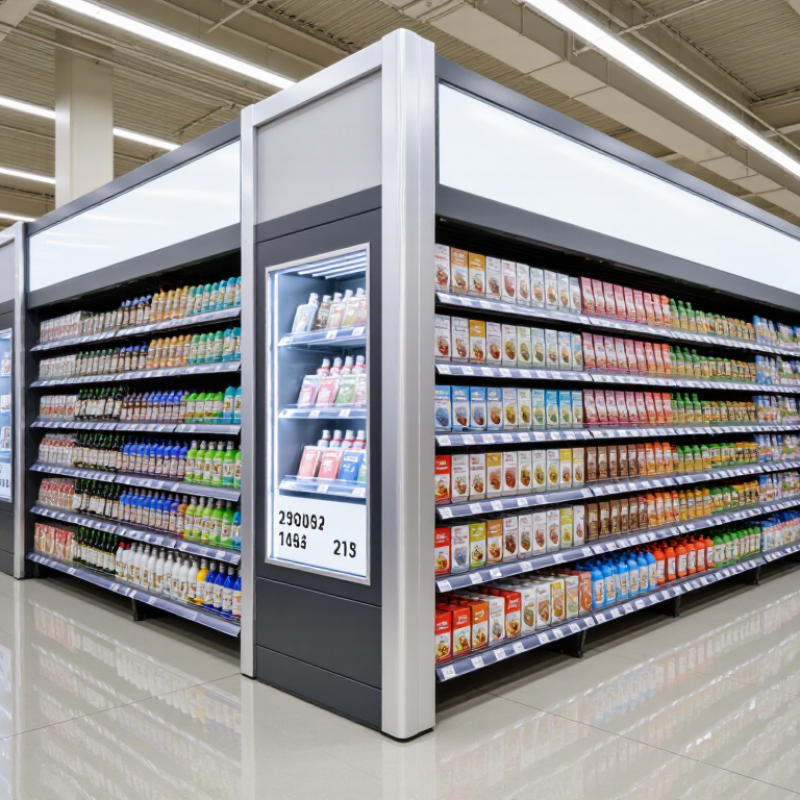
Endcap displays occupy the aisle’s final sightline and often shape a shopper’s first product decision. In practice, they are not spare shelving. They are compact selling environments that combine merchandising, storage, lighting, and clear navigation. A reliable design keeps products within easy reach, protects corners, and leaves enough walking space for carts and mobility devices. Measurements matter more than attractive drawings.
Global retail adds another layer of complexity. A display that performs well in a large hypermarket may feel crowded in a small urban store. Retail teams should test shelf height, viewing angles, refill speed, and language placement in each market. Local packaging rules, accessibility expectations, recycling standards, and fire-safety requirements also need early review. Digital screens can support timely information, but they may increase power use, glare, and maintenance work.
One recurring mistake is treating every market as visually identical. Field checks often reveal unexpected details, such as shoppers avoiding a glossy surface under strong ceiling lights. Small trials can expose these problems before a wider rollout. Track unit sales, stockout frequency, shopper movement, and staff feedback for several weeks. Do not trust sales alone. A crowded display may sell quickly while creating unsafe replenishment routines. The best endcap is not always the most dramatic one; sometimes it is quieter, easier to service, and better suited to local habits.
Regional urbanization and internet adoption provide useful planning signals for endcap selection. Markets with higher urban concentration may favor compact, high-visibility displays for frequent shopping trips, while markets with lower connectivity may benefit from clearer in-store messaging, stronger product education, and more robust physical signage. The figures show the latest broadly comparable regional indicators published by the World Bank and are intended as market-planning inputs rather than brand performance data.
Sources: World Bank, World Development Indicators, “Urban population (% of total population)” and “Individuals using the Internet (% of population),” latest available regional observations.
Endcap displays should match the store format, not just the product.
A compact urban store needs narrow units with clear sightlines and fast replenishment. Hypermarkets can support wider structures, larger graphics, and multi-level merchandising. In my field experience, displays often fail when planners copy one format across every location. A successful unit in a spacious store may block traffic in a smaller branch. Measure aisle width, shopper flow, ceiling height, and restocking access before selecting materials.
Market conditions also shape the right design. Humid regions may require moisture-resistant boards and protected print surfaces. Dusty environments need fewer exposed ledges and easier cleaning. Local shopping habits matter, too. Some customers compare prices carefully, while others respond to bold demonstrations.
Product requirements must guide the display’s structure. Heavy items need reinforced shelves, while fragile goods require stable holders and controlled handling. Seasonal products may need quick graphic changes. Testing matters. Yet, a short pilot can reveal problems that computer models miss.
Tips:
Photograph the intended aisle before production. Test the display with real package weight. Check whether staff can refill it without moving nearby stock. Use readable pricing and local language. Leave space for accessibility and emergency movement. Review sales, damage, and shopper feedback after launch. Do not assume the first design is perfect. Improve it market by market.
Selecting Materials, Structures, and Modular Display Features
For global retail in 2026, endcap selection starts with the store environment, not a catalog image. In humid coastal locations, sealed fiberboard or treated plywood resists swelling better than untreated panels. In dry, high-traffic stores, powder-coated steel protects corners and accepts repeated cleaning. Recycled plastics can reduce weight, but their color consistency may vary between production batches. That detail affects premium presentation. Ask suppliers for sample panels, finish tests, and documented material content. Do not rely on a digital rendering.
Structure should match the installation team. Flat-pack frames lower freight volume and simplify regional distribution. Tool-free joints speed changeovers, especially when seasonal campaigns share one footprint. Adjustable shelves support different package heights, while lockable casters help staff reposition heavy units safely. A narrow base may look efficient, yet it can become unstable near busy aisles. I have seen attractive displays fail because the header blocked sightlines. Measure the shopper’s approach, not only the product bay.
Measure the shopper’s approach, not only the product bay.
Modularity creates value when each part has a clear job. Use interchangeable headers, shelf brackets, sign holders, and lighting rails. Keep fasteners common across markets where possible. Provide spare clips and a simple assembly guide with visual steps. Digital screens can add flexibility, but they also increase maintenance and power demands. A printed panel may be less impressive, yet more reliable in stores with limited technical support. Leave room for honest review after launch. Record damaged parts, staff comments, cleaning time, and shopper movement. The first version will not be perfect. That is useful evidence for the next production cycle.
An endcap display should feel local before it feels global. In my field experience, shoppers respond better when layouts reflect familiar buying habits. A compact display may suit dense urban stores, while wider spacing helps shoppers in quieter markets. Study local languages, reading directions, color meanings, and shopping routines before approving artwork. Avoid translating slogans word for word. The result can sound awkward, or even disrespectful. Test shelf height with local shoppers, including older customers and wheelchair users.
Tips: Check regional measurement rules, material standards, accessibility guidance, and fire-safety requirements with qualified local specialists. Use clear product information. Keep promotional claims factual and easy to verify. Select durable materials that tolerate local heat, humidity, dust, or frequent cleaning. A beautiful prototype can fail quickly in a coastal store.
Cultural adaptation also requires restraint. Some markets prefer bold visual energy; others trust calm layouts and detailed information. Do not assume one color carries the same message everywhere. Ask local store teams to review mockups before production. Their practical knowledge often reveals problems that remote designers miss. Measure conversion, shopper pauses, restocking time, and damaged components after launch. Then revise the design. Not every first version deserves to stay.
Choosing endcap displays for global retail in 2026 requires more than attractive graphics and efficient shelf space. Performance must be measured across markets, not assumed from one successful store. Track sales lift, conversion rate, stock availability, shopper engagement, and display maintenance time. Compare results with similar stores that lack the display. This creates a clearer baseline.
Local conditions can change the outcome. A bright endcap may perform well in a large, well-lit store but fail in a smaller location. Measure viewing distance, aisle traffic, language clarity, and product accessibility. Store teams should record blocked products, damaged parts, and replenishment delays. Their observations often explain numbers that dashboards miss.
Use short testing cycles. Run one display version for four weeks, then compare it with a controlled variation. Keep pricing, product placement, and promotional timing as consistent as possible. Not every result is clean. Weather, holidays, staffing, and local shopping habits can distort performance. Document these factors before making decisions. A display that wins in one country may need different colors, dimensions, or messages elsewhere. Treat that difference as evidence, not failure. Review the data with local teams, question unusual results, and update the design carefully. Small adjustments can improve visibility without increasing material waste or operating costs.
Sealed fiberboard or treated plywood can resist swelling better than untreated panels.
Powder-coated steel protects corners in dry, busy stores.
Flat-pack frames reduce freight volume and support regional distribution.
Adjustable shelves fit different package heights.
Measure the shopper’s approach, not only the product bay.
Study local languages, reading directions, color meanings, and shopping routines.
Check regional measurement rules, material standards, accessibility guidance, and fire-safety requirements.
Record damaged parts, staff comments, cleaning time, shopper pauses, and restocking delays.
Choosing the right Endcap Displays for global retail in 2026 requires a balance of commercial goals, local relevance, and operational flexibility. Retailers should first evaluate each store format, market environment, shopper behavior, and product category before selecting a display solution. Materials and structures must support product visibility, safety, durability, easy installation, and efficient replenishment. Modular components can help retailers adjust layouts, messaging, and product quantities without replacing the entire unit, making displays more practical across different locations.
Successful global programs also require thoughtful adaptation to local cultures, regulations, languages, accessibility expectations, and shopping habits. A design that performs well in one market may need changes in color, communication style, dimensions, or product presentation elsewhere. After installation, retailers should measure sales uplift, shopper engagement, stock movement, maintenance needs, and display compliance. Comparing results across markets can reveal what works best and guide continuous improvements, helping Endcap Displays remain effective, relevant, and adaptable throughout 2026.

DeltaStorage