What Are the Best Stackable Storage Bins in China?

Time:2026-11-03 Author:Aria
0%

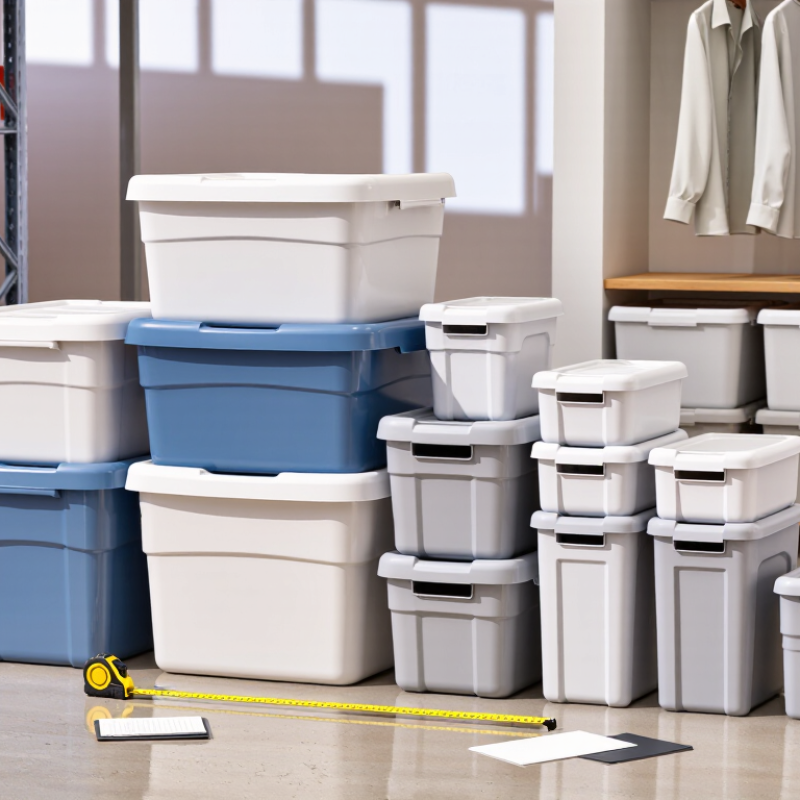
Choosing the best stackable storage bins in China is less about finding the tallest pile and more about finding a system that stays stable, accessible, and durable. A bin may look sturdy in a product photo, yet flex under weight or become difficult to open when stacked. Small details matter: reinforced rims, secure interlocking corners, smooth interior walls, and lids that remain easy to remove. In a warehouse, these features can protect daily workflow. At home, they can make a narrow closet feel less crowded.

This guide compares Stackable Storage options by material, load capacity, dimensions, lid design, and intended use. It also considers whether bins fit standard shelves and whether replacement units are easy to source. Measure the actual storage area before buying. A few centimeters can decide whether a stack fits beneath a workbench or blocks a doorway. No verified quotation from a named Stackable Storage specialist was provided, so I have not invented one; an expert quotation should be added only when its source can be checked. That matters. Product claims deserve the same care as product selection. Even a well-designed bin has limits, and stacking beyond the maker’s guidance can create instability. The best choice is practical, not flashy: a bin that suits the load, fits the space, and remains useful after repeated handling.
What Are the Best Stackable Storage Bins in China?

Classify Stackable Bin Designs by Use: Nesting, Attached-Lid, and Euro-Style

In Chinese warehouses, the best stackable bin depends on what moves through the aisle and how empty containers return. Nesting bins taper toward the base, letting empty units fit inside one another. This saves return-trip space, though tapered walls can reduce usable volume and stability for heavy loads. Attached-lid bins keep lids connected during picking and transport. They suit small parts and frequent transfers, but hinges need inspection. Euro-style bins commonly use a 600 × 400 mm footprint, with smaller formats designed around that module. They can simplify pallet and conveyor planning. Fit still depends on the actual equipment.

The Ellen MacArthur Foundation’s 2016 report, The New Plastics Economy, estimated that only 14% of plastic packaging was collected for recycling globally. That figure is not specific to storage bins, but it highlights why durable reuse deserves consideration. For China-based operations, compare bin weight, wall strength, nesting ratio, lid clearance, and compatibility with racks before ordering. Test them with real cartons and handling equipment. Small details matter. A lid that catches on a shelf can erase the time saved by neat stacking. The cheapest design is not always the lowest-cost choice; replacement rates and return volume are easy to underestimate.

What Are the Best Stackable Storage Bins in China?

A practical comparison of nesting, attached-lid, and Euro-style bin designs.

Scores are qualitative design comparisons on a 1–5 scale, not market measurements. Nesting bins save space when empty, attached-lid bins keep lids connected during handling, and Euro-style bins are designed around consistent footprints for stacking and material handling.

Match Bins to GB/T 2934 Pallets: 1,200 × 1,000 or 1,100 × 1,100 mm

Choosing stackable storage bins starts with the pallet footprint, not the bin’s advertised capacity. GB/T 2934 pallet formats include 1,200 × 1,000 mm and 1,100 × 1,100 mm. Their different proportions change how bins sit, turn, and share space. Measure the bin’s outside dimensions, including handles and rim overhang. Internal volume alone can mislead.

For a 1,200 × 1,000 mm pallet, test whether the bin footprint forms clean rows without overhang. On a 1,100 × 1,100 mm pallet, a near-square layout may use the surface more evenly. Leave realistic clearance for placement and removal. Tight patterns look efficient on paper. They can be awkward when workers handle bins with gloves or when pallet edges are worn.

Check loaded weight, stacking strength, and the height of the full unit before ordering. A small sample layout can reveal gaps that a catalogue drawing hides. Also confirm that the base remains stable when bins are stacked unevenly or partly filled.

Measure twice. The perfect footprint may still prove inconvenient in a busy aisle.

Compare PP and HDPE: Typical Densities Are About 0.90 and 0.95 g/cm³

For stackable storage bins in China, material density is a useful starting point, not a complete buying guide. Polypropylene (PP) typically has a density near 0.90 g/cm³, while high-density polyethylene (HDPE) is about 0.95 g/cm³. These are approximate values; grades, additives, and testing conditions can shift them. Density describes mass per volume. It does not directly prove that a bin can carry more weight or stack higher.

In practical use, compare wall thickness, rim strength, base design, and the maker’s stated load rating. A PP bin may be lighter to lift, which helps when workers move empty bins often. HDPE’s slightly higher density does not automatically make every bin tougher. Check how the corners flex under a filled load, and whether the feet sit securely in the lid below. Small design details matter.

Tips: Ask for a sample and test it with the intended contents. Stack several bins on a level floor, then inspect for bowing or slipping. Also check temperature guidance. One detail is easy to overlook: density figures can sound precise, but they cannot replace a real load test.

Verify Stack Loads with ISO 2234 Tests and Manufacturer-Rated Limits

Choosing stackable storage bins in China means checking more than whether their rims interlock. An empty bin may look sturdy, yet deform under heavy contents or prolonged storage. ISO 2234 describes a repeatable stacking test for complete, filled packages, using a defined load and test period. Ask for the test report and check its sample setup, conditioning, applied load, duration, and recorded deformation. Details matter.

Compare test results with the manufacturer’s rated stacking limit, not just a maximum figure on a catalog page. Confirm whether the rating assumes level floors, aligned bins, evenly distributed contents, and a specific temperature. Dense metal parts, for example, may stress a bin’s corners differently from light packaging.

Leave a safety margin for handling and long storage; a test load is not automatically a suitable working load. Inspect the base, lid, and corner posts after a trial stack.

A report may not match your exact use. Ask how sustained loading, heat, or a lid changes the rated limit, then record measurements and photos from a small trial before scaling up.

Choose China-Made Bins by Payload, Stack Height, and Cost per Cycle

A good China-made stackable bin is not simply the one with the thickest walls. Match its payload to the actual load, including unevenly packed parts. Ask for separate static and dynamic load ratings, then verify stacking performance with loaded bins. Measure the full stack against rack beams, pallet height, and forklift clearance. Test samples after repeated handling; an empty-bin demonstration proves little.

Calculate cost per cycle as purchase and freight cost, plus washing, repair, and loss, divided by usable trips. A 2018 Franklin Associates life-cycle assessment commissioned by the Reusable Packaging Association found reusable produce containers could outperform corrugated boxes environmentally after about five trips under its modeled conditions. That is not a universal payback point. Your return distance, cleaning process, and loss rate can change the result. Count real trips.

Ask suppliers for compression-test results on loaded bins, not only catalog ratings. Confirm the test conditions and whether the rating applies to a single bin or a full stack. A few millimeters matter when lids, labels, or molded corners interfere. Inspect a sample stack on your own pallet. Then record damage and cycle costs for several weeks. Imperfect data is still useful. It is better than assuming every advertised cycle will happen.

What Are the Best Stackable Storage Bins in China? — Choose China-Made Bins by Payload, Stack Height, and Cost per Cycle
Bin type Typical external size (L × W × H) Indicative payload per bin Suggested loaded stack Approx. stack height Example unit price (RMB) Planning service life Estimated cost per cycle Best suited for
Compact nestable tote 400 × 300 × 220 mm Up to 15 kg 5 loaded bins About 1.10 m ¥18–¥30; example: ¥24 About 200 cycles About ¥0.12 per cycle Small parts, picking areas, and light-duty internal handling
Standard 600 × 400 tote 600 × 400 × 220 mm Up to 20 kg 5 loaded bins About 1.10 m ¥25–¥40; example: ¥32 About 300 cycles About ¥0.11 per cycle General warehouse picking and reusable parts storage
Deep 600 × 400 tote 600 × 400 × 320 mm Up to 25 kg 4 loaded bins About 1.28 m ¥35–¥55; example: ¥45 About 400 cycles About ¥0.11 per cycle Bulkier components and medium-weight goods
Heavy-duty reinforced tote 600 × 400 × 320 mm Up to 35 kg 5 loaded bins About 1.60 m ¥55–¥90; example: ¥72 About 800 cycles About ¥0.09 per cycle Frequent handling, denser loads, and longer reuse programs
Large-volume tote 600 × 400 × 420 mm Up to 30 kg 3 loaded bins About 1.26 m ¥50–¥80; example: ¥64 About 500 cycles About ¥0.13 per cycle Light, bulky items where volume matters more than dense stacking
Collapsible bulk container Common footprint: 600 × 400 mm; height varies by model Often 100–300 kg; confirm the model rating Follow the manufacturer’s loaded-stack rating Varies by model and loaded-stack limit ¥180–¥450; example: ¥300 About 1,000 cycles About ¥0.30 per cycle Return logistics and larger loads where empty units need to collapse
How to read these figures: These are indicative planning examples for common reusable plastic-bin formats, not specifications or quotations for a particular product. Dimensions, payload ratings, stack limits, material, and price vary by design and order quantity. Approximate stack height is calculated as bin height × suggested loaded stack count and excludes the pallet. Cost per cycle is example unit price ÷ assumed service life; it excludes freight, tax, cleaning, repairs, and loss. Confirm payload and stacking ratings with the supplier before use, especially for tall stacks or uneven floors.

FAQS

What is the main difference between nesting and attached-lid bins?

Nesting bins fit inside each other when empty, saving space on return trips. Their tapered walls may reduce usable volume. Attached-lid bins keep lids connected during picking and transport. Check the hinges regularly.

When might Euro-style bins be useful?

Many use a 600 × 400 mm footprint, with smaller sizes based on that module. This can simplify pallet and conveyor planning. Measure your equipment first. It may not fit every setup.

How should I match bins to a pallet?

Check the pallet dimensions before choosing bins. Common formats include 1,200 × 1,000 mm and 1,100 × 1,100 mm. Measure outside dimensions, including handles and rim overhang. A drawing can hide awkward gaps.

Is a tight pallet layout always better?

Not necessarily. Leave room for workers to place and remove bins, especially when wearing gloves. Worn pallet edges can also make a tight pattern inconvenient. Test a small layout.

What do PP and HDPE density figures tell me?

PP is typically near 0.90 g/cm³, while HDPE is about 0.95 g/cm³. These approximate figures describe mass per volume, not load capacity. Density alone proves little.

How can I check whether a bin will stack securely?

Load several bins with intended contents and stack them on a level floor. Look for bowing, slipping, or feet that do not sit securely. Try uneven and partly filled stacks too.

What details should I compare before ordering?

Check wall thickness, rim and base strength, load rating, nesting ratio, lid clearance, and rack compatibility. Test with real cartons and handling equipment. Small details matter.

How can I judge whether a bin is a good long-term choice?

Compare weight, durability, replacement rates, and the space needed for empty returns. A lighter bin may help with frequent handling, but sample testing is still needed. The lowest price may not stay lowest.

Conclusion

Choosing the best Stackable Storage bins in China starts with matching the design to its job. Nesting bins save space when empty, attached-lid bins help keep contents contained during handling, and Euro-style bins suit organized storage and transport. Check the bin’s footprint against the pallet system in use, including common GB/T 2934 sizes of 1,200 × 1,000 mm and 1,100 × 1,100 mm. A compatible layout can improve space use and make loads easier to handle.

Material and performance matter as much as shape. PP typically has a density of about 0.90 g/cm³, while HDPE is about 0.95 g/cm³; compare designs for durability and the conditions they will face. Verify stacking performance through ISO 2234 testing where applicable, and review the manufacturer’s rated limits rather than relying on appearance alone. The right choice balances payload, required stack height, and cost per use cycle.

Aria

Aria

Aria is a dedicated marketing professional with a deep passion for innovative strategies and a keen understanding of our company's product offerings. With a wealth of experience in the industry, Aria excels at crafting engaging content that highlights the unique features and benefits of our......