2026 Top Folding Shelves for Global Buyers?

Time:2026-10-27 Author:Amelia
0%

Choosing the right Folding Shelves in 2026 requires more than comparing prices or attractive product photos. Global buyers must examine load capacity, folded size, materials, safety features, and supplier reliability. A shelf may support 150 kilograms in a controlled test, yet perform differently on uneven floors or during repeated relocation.

This guide explores practical options for warehouses, retail stores, workshops, offices, and temporary display areas. It considers steel frames, reinforced plastic panels, locking wheels, corrosion resistance, and tool-free assembly. Each detail matters. A loose hinge can affect stability. Thin packaging can increase transit damage. Poor measurements can create expensive storage problems.

International purchasing also demands careful verification. Buyers should request technical drawings, tested load data, material specifications, packaging photographs, and sample units before placing large orders. Compliance documents may differ between countries, so local requirements deserve professional review. Supplier communication matters too. Clear answers about warranty coverage, replacement parts, production capacity, and inspection procedures often reveal more than a polished catalog.

No ranking fits every market. A compact shelf may suit a small apartment but fail in a busy stockroom. A heavy-duty model may offer strength but increase freight costs. This comparison aims to identify dependable choices while recognizing those trade-offs. Some product claims still need independent confirmation. That is worth remembering. Reliable decisions come from evidence, real-use testing, and honest attention to limitations.
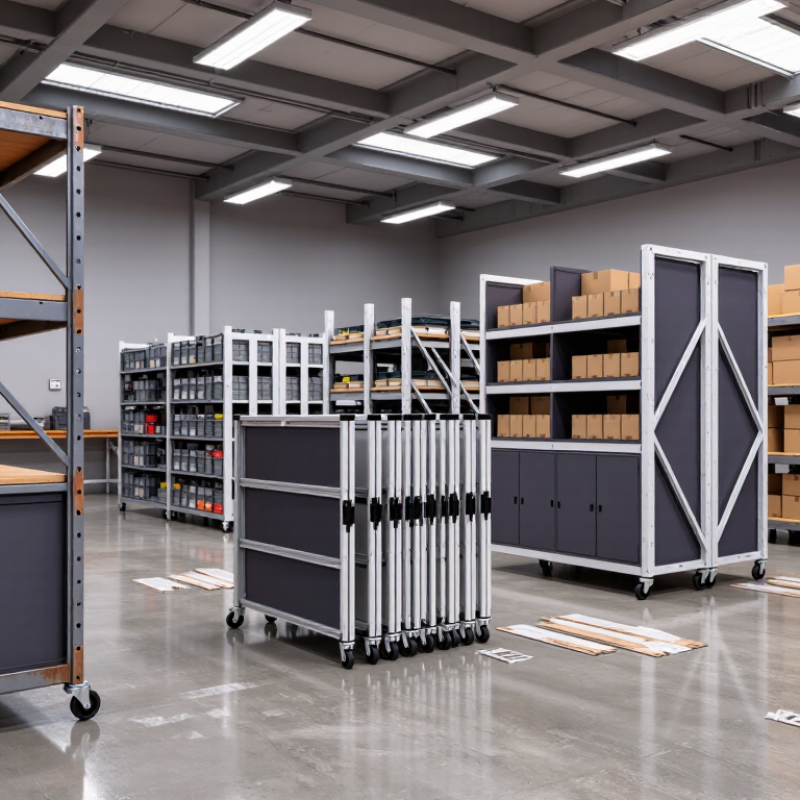
2026 Top Folding Shelves for Global Buyers?

2026 Folding Shelf Market: CAGR, HS 9403 Trade Data, and Demand

The 2026 folding shelf market is gaining attention as homes, warehouses, and temporary retail spaces demand flexible storage.

Grand View Research estimates the broader global shelving market could grow at about 5.1% CAGR from 2024 to 2030. However, folding shelves are only one segment. Public forecasts often combine industrial racks, household units, and commercial systems. That weakens direct comparison.

HS 9403 provides a useful trade reference, but it covers furniture and related parts, not folding shelves alone. UN Comtrade and ITC Trade Map data can reveal import value, shipment direction, and supplier concentration under this heading.

Buyers should review national tariff lines before calculating landed costs. Classification mistakes can distort margins.

Practical demand is visible in product details.

A 90-centimeter shelf, tool-free hinges, and a 30-kilogram load rating matter more than attractive lifestyle images. Steel frames support repeated use, while laminated panels reduce weight. Moisture resistance is important for balconies and stockrooms. Independent testing should confirm load capacity and locking stability.

Demand is not perfectly predictable. Freight rates, housing activity, and small-space living trends can change quickly. Some market reports also rely on modeled estimates rather than customs records.

Treat the CAGR as a planning signal, not a guarantee.

A careful buyer should compare three years of HS 9403 imports with local retail prices, seasonal orders, and return rates. This approach is slower, but more reliable.

Folding Shelf Types: Materials, Dimensions, and 50–150 kg Load Ratings

2026 Top Folding Shelves for Global Buyers?

Folding shelves now serve apartments, retail rooms, workshops, and temporary storage areas. Their main advantage is simple: they save floor space when folded. Buyers should compare materials, dimensions, and tested load ratings before choosing a model.

Powder-coated steel usually offers strong frames and better resistance to daily impacts. Aluminum is lighter and suits mobile storage, but it may flex under heavier loads. Bamboo or laminated wood can create a warmer appearance, although humidity may cause swelling. Common shelf widths range from 600 to 1,200 millimeters, while depths often measure 300 to 600 millimeters. Check the folded thickness too. It determines transport and wall clearance.

Load ratings commonly range from 50 to 150 kilograms per shelf. These figures should describe evenly distributed weight, not one heavy box at the center. A 150-kilogram rating does not guarantee safe use on a weak wall or uneven floor. Inspect hinge pins, locking brackets, welds, and anti-slip feet. A practical test uses gradually added cartons and checks for frame movement. Some suppliers provide useful test records, but paperwork alone is not enough. In real use, dust can affect hinges, and repeated folding may loosen fasteners. That detail is easy to overlook. Global buyers should request dimensional drawings, material specifications, packaging measurements, and replacement-part information before placing large orders.

2026 Top Folding Shelves for Global Buyers — Folding Shelf Types: Materials, Dimensions, and 50–150 kg Load Ratings
Folding Shelf Type Typical Frame Material Shelf Surface Common Dimensions
(W × D × H)
Folded Thickness Rated Load Approx. Product Weight Best Use
Single-Tier Wall-Mounted Shelf Powder-coated carbon steel Steel panel or laminated wood board 600 × 300 × 35 mm 70–90 mm 50 kg 5–8 kg Kitchens, workshops, utility rooms, and compact retail displays
Two-Tier Folding Wall Shelf Powder-coated carbon steel Cold-rolled steel mesh or perforated panels 800 × 350 × 650 mm 90–120 mm 60 kg total 9–13 kg Pantries, stockrooms, laundry areas, and light commercial storage
Folding Utility Rack Carbon steel tube with reinforced joints Wire grid or steel sheet 900 × 450 × 1,000 mm 80–110 mm 80 kg total 12–17 kg Garages, maintenance areas, temporary storage, and event support
Three-Tier Folding Rack Powder-coated steel tubing Steel wire shelves with raised edges 900 × 450 × 1,350 mm 100–140 mm 90 kg total 16–22 kg Warehouses, retail backrooms, kitchens, and home organization
Heavy-Duty Folding Rack Reinforced carbon steel tube Pressed steel panel or heavy-gauge wire deck 1,200 × 600 × 1,500 mm 120–160 mm 120 kg total 25–34 kg Industrial storage, tools, spare parts, and distribution facilities
Folding Display Shelf Aluminum alloy frame or lightweight steel Melamine-faced MDF or laminated plywood 1,000 × 400 × 1,600 mm 100–130 mm 70 kg total 14–21 kg Trade shows, pop-up shops, exhibitions, and temporary merchandising
Folding Plastic Storage Rack Glass-fiber-reinforced polypropylene Injection-molded polypropylene panels 700 × 350 × 1,200 mm 110–150 mm 60 kg total 8–14 kg Moisture-prone rooms, camping, dormitories, and household storage
Folding Stainless-Steel Shelf 304 stainless steel tubing 304 stainless steel sheet or wire 900 × 450 × 1,200 mm 100–140 mm 100 kg total 18–26 kg Food preparation areas, laboratories, healthcare, and humid environments
Folding Bamboo Shelf Laminated bamboo with steel hinges Finished laminated bamboo panels 800 × 350 × 1,000 mm 90–130 mm 50 kg total 10–16 kg Residential rooms, boutique displays, offices, and eco-focused interiors
Mobile Folding Shelf with Casters Powder-coated carbon steel Steel mesh or laminated particleboard 1,000 × 500 × 1,400 mm 150–190 mm 150 kg total 28–40 kg Warehouses, catering operations, workshops, and flexible room layouts
Selection note: Load ratings are typical maximum static capacities for evenly distributed loads on properly assembled shelves. Actual capacity depends on the frame design, hinge construction, mounting surface, fasteners, shelf spacing, caster brakes, and operating conditions. Always verify the supplier’s test documentation and installation requirements before purchasing.

Safety Standards: ISO 7170 Testing, Stability, and Tip-Over Prevention

2026 Top Folding Shelves for Global Buyers?

For global buyers, ISO 7170 testing is a practical safety reference for folding shelves. The standard evaluates storage furniture for strength, durability, and stability under defined loads. It does not automatically prove that every product is safe in every home. Folding joints deserve special attention. Repeated opening can loosen hinges, pins, or locking parts. A credible test report should identify the shelf model, load levels, test cycles, and failure results.

Tip-over prevention matters because a loaded shelf can behave like a lever. The U.S. Consumer Product Safety Commission reported about 22,000 annual furniture tip-over injuries among children during 2018–2020. The report shows why stability testing should not be treated as paperwork. Buyers should check the center of gravity, base width, locking mechanism, and wall-anchoring instructions. A shelf that feels stable when empty may shift when books are placed on the upper tier.

Tips: Ask for an ISO 7170 test report from an independent laboratory. Confirm whether testing covered folded and fully opened positions. Use the supplied anti-tip hardware, and install it into a suitable wall structure. Keep heavy items low. Check fasteners after several weeks of use. Small details matter.

In my experience, product photos rarely reveal side-to-side movement. That is a weakness. Buyers should request short videos showing loading, folding, and locking. They should also review warnings in their own language. Standards improve decisions, but careful installation remains part of the safety system.

Global Buyer Metrics: MOQ, Incoterms, Lead Times, and Container Capacity

2026 Top Folding Shelves for Global Buyers?

Global buyers should define MOQ by packaging efficiency, not price alone. For folding shelves, a practical starting request is 100, 300, and 500 units. Each tier reveals production savings and container utilization. Ask for carton dimensions, gross weight, and packed-unit measurements. A folded shelf can save space, but hardware and protective inserts may reduce the advantage.

Incoterms must match the buyer’s logistics control. Under ICC Incoterms 2020, FOB separates ocean freight from factory delivery, while DDP places wider delivery responsibilities on the seller. The cheaper quote is not always safer. Get insurance, customs clearance, destination handling, and local taxes stated separately.

Lead times need two buffers. Allow 35–60 days for production, then add ocean transit and port handling. UNCTAD’s Review of Maritime Transport 2024 highlights continuing route disruption and schedule uncertainty. The World Bank Logistics Performance Index 2023 also shows clear differences in customs, infrastructure, and shipment timeliness between markets. For container planning, a 40-foot high-cube container offers about 76 cubic meters internally, but practical loading may use only 65–68 cubic meters. A loading plan should count pallets, aisle protection, and damaged-carton space. The spreadsheet may still lie. Request a physical loading simulation before payment.

2026 Top Folding Shelves for Global Buyers

The chart compares practical procurement benchmarks for different global buying profiles. MOQ is shown in units per order, lead time covers production after deposit and specification approval, and 40HC capacity is an estimated number of folded shelf units based on standard export packaging. Actual figures vary by shelf size, packaging design, customization, and shipping route.

EXW
The buyer arranges pickup, export clearance, freight, insurance, and import procedures.
FOB
The seller delivers cargo on board at the agreed port; the buyer manages main carriage and import costs.
CIF
The seller arranges ocean freight and basic insurance to the destination port; import clearance remains with the buyer.
DDP
The seller manages delivery, import clearance, duties, and taxes where legally and commercially applicable.

Planning note: A 40HC container typically provides about 68 cubic metres of internal volume. Folding shelf capacity is calculated from packed volume and should be confirmed with a final carton specification and loading plan.

Total Cost Analysis: Unit Price, Packaging Weight, Freight, and Tariffs

2026 Top Folding Shelves for Global Buyers?

Total Cost Analysis: Unit Price, Packaging Weight, Freight, and Tariffs

A low unit price does not always mean a lower landed cost. Folding shelves often need protective corners, moisture barriers, and reinforced cartons. These materials increase packaging weight and shipping volume. A compact shelf may look efficient, yet oversized cartons can trigger dimensional freight charges. Ask suppliers for packed dimensions, gross weight, carton quantity, and loading photos before comparing quotations.

Freight depends on destination, route, season, and shipping method. Ocean freight may reduce the base cost, but port handling, documentation, inland delivery, and storage can change the result. Tariffs also require careful review. The correct product classification, declared value, origin, and trade terms affect payable charges. Confirm these details with a qualified customs professional in the destination market. Rules can change.

Tips: Build a landed-cost sheet for every supplier. Include unit price, packaging, freight, insurance, duties, broker fees, and local delivery. Request two freight scenarios, not one. A modest carton redesign may reduce volume substantially. Still, savings are not guaranteed. My own review point is simple: buyers often trust factory quotations too quickly, while the final invoice tells a different story. Leave a contingency allowance for exchange-rate movement and unexpected port fees.

FAQS

What does a furniture safety test evaluate for folding shelves?

It checks strength, durability, and stability under defined loads. It should include model details, load levels, test cycles, and failure results.

Should testing cover both folded and opened positions?

Yes. Folding joints may behave differently in each position. Ask for evidence covering hinges, pins, locks, and repeated opening.

Why can a loaded shelf tip over?

Upper-tier books can move the center of gravity forward. A narrow base increases the lever effect. Empty shelves can feel misleadingly stable.

How can buyers reduce tip-over risks at home?

Keep heavy items on lower shelves. Use the supplied anti-tip hardware. Attach it to a suitable wall structure, not just a weak surface.

What should buyers request beyond product photographs?

Request a short video showing loading, folding, and locking. Photos rarely reveal side-to-side movement. That weakness deserves more attention.

What purchase quantities help compare production efficiency?

Request quotes for 100, 300, and 500 units. Compare carton size, gross weight, and packed-unit measurements. The cheapest unit price may still waste container space.

How should buyers compare shipping responsibilities?

Confirm factory delivery, ocean freight, insurance, customs clearance, taxes, and destination handling separately. A lower quote may hide important costs.

How much time should buyers allow for production and shipping?

Production may require 35 to 60 days. Add ocean transit and port handling time. Route disruption can create further delays. Plan buffers.

How much space does a forty-foot high-cube container provide?

Its internal volume is about 76 cubic meters. Practical loading may use only 65 to 68 cubic meters. Pallets, protective inserts, and damaged-carton space reduce capacity.

Is a spreadsheet enough for container planning?

Not always. Request a physical loading simulation before payment. Carton dimensions can differ from real loading conditions. Our estimate may still be wrong.

Conclusion

The 2026 folding shelf market is expected to attract global buyers seeking space-saving, flexible, and cost-efficient storage solutions. Folding Shelves are available in materials such as steel, aluminum, wood, and engineered panels, with various dimensions and load capacities typically ranging from 50 to 150 kg. Market analysis should consider CAGR trends, HS 9403 trade data, regional demand, and the growing need for compact storage in residential, commercial, and industrial environments.

For international purchasing, buyers should evaluate ISO 7170-related testing, structural stability, locking mechanisms, and tip-over prevention before placing orders. Key sourcing factors include MOQ, Incoterms, production lead times, carton dimensions, packaging weight, and container loading capacity. A complete cost assessment should combine the unit price with packaging, inland transport, ocean freight, insurance, customs duties, and applicable tariffs. Comparing these factors helps buyers select reliable folding shelf solutions while maintaining safety, delivery efficiency, and competitive landed costs.

Amelia

Amelia

Amelia is a seasoned marketing professional with a wealth of expertise in our company’s core offerings. With an unwavering passion for driving growth and innovation, she plays a pivotal role in shaping our marketing strategies and enhancing brand visibility. A key aspect of her responsibilities......